


Choosing a bathtub material is one of the most consequential decisions in a bathroom renovation and it's one that most people get very little honest guidance on. The showroom wants to upsell you. The renovation blogs are sponsored. And the price difference between the cheapest and most expensive options runs into the tens of thousands of dollars.
This guide breaks down the four materials that dominate the Australian premium bathtub market in 2026 marble, acrylic, cast iron, and stone resin across every factor that actually matters: heat retention, durability, weight, maintenance, aesthetics and long-term value. No fluff, no brand allegiances.
The Four Contenders at a Glance
| Material | Price Range (AUD) | Weight | Lifespan | Heat Retention |
|---|---|---|---|---|
| Acrylic (freestanding) | $900 – $4,500 | 25–35kg | 10–15 years | Poor |
| Stone resin (composite) | $3,000 – $10,000 | 80–140kg | 20–30 years | Good |
| Cast iron (imported) | $4,000 – $12,000+ | 150–250kg | 50+ years | Excellent |
| Natural marble | $12,000 – $35,000+ | 300–700kg | Lifetime | Excellent |
Let's go through each one properly.
Acrylic Bathtubs
Acrylic is the most widely installed bathtub material in Australia by a significant margin. Walk into any project home or mid-range renovation and you'll find one. That market dominance says a lot about its accessibility it says very little about its quality.
What it is
Acrylic bathtubs are formed from sheets of petroleum-based thermoplastic, vacuum-moulded into shape and typically reinforced underneath with fibreglass. They're lightweight, easy to manufacture in virtually any shape, and inexpensive to produce which is why they dominate the volume end of the market.
What it does well
Acrylic is genuinely easy to clean. The smooth, non-porous surface resists mould and doesn't require sealing. It's warm to the touch stepping into an acrylic tub feels immediately comfortable, unlike cold stone. It's also repairable: surface scratches and minor chips can be buffed out or filled. And at under 35kg, installation is simple and requires no structural considerations.
Where it falls short
The problems with acrylic compound over time. It scratches readily bath salts, abrasive cleaners and jewellery will leave marks that accumulate into a surface that looks grimy no matter how thoroughly you clean it. Acrylic flexes noticeably when you apply weight — that slight give underfoot is a characteristic of the material, but it doesn't feel substantial. Heat retention is poor: bathwater in an acrylic tub will cool noticeably within 15–20 minutes, which means topping up with hot water regularly during longer soaks. And aesthetically, acrylic simply cannot replicate the depth, variation and presence of natural materials it looks like what it is.
A good acrylic freestanding bathtub in Australia starts around $900 and reaches $4,500 for premium designer styles. A well-maintained acrylic bathtub will last around 10–15 years before the surface shows enough wear to warrant replacement. For a family bathroom or an investment property, that's a reasonable proposition. For a forever home or a principal bathroom, it's a compromise from day one.
Best suited to: investment properties, rental renovations, budget-conscious builds.
Stone Resin Bathtubs
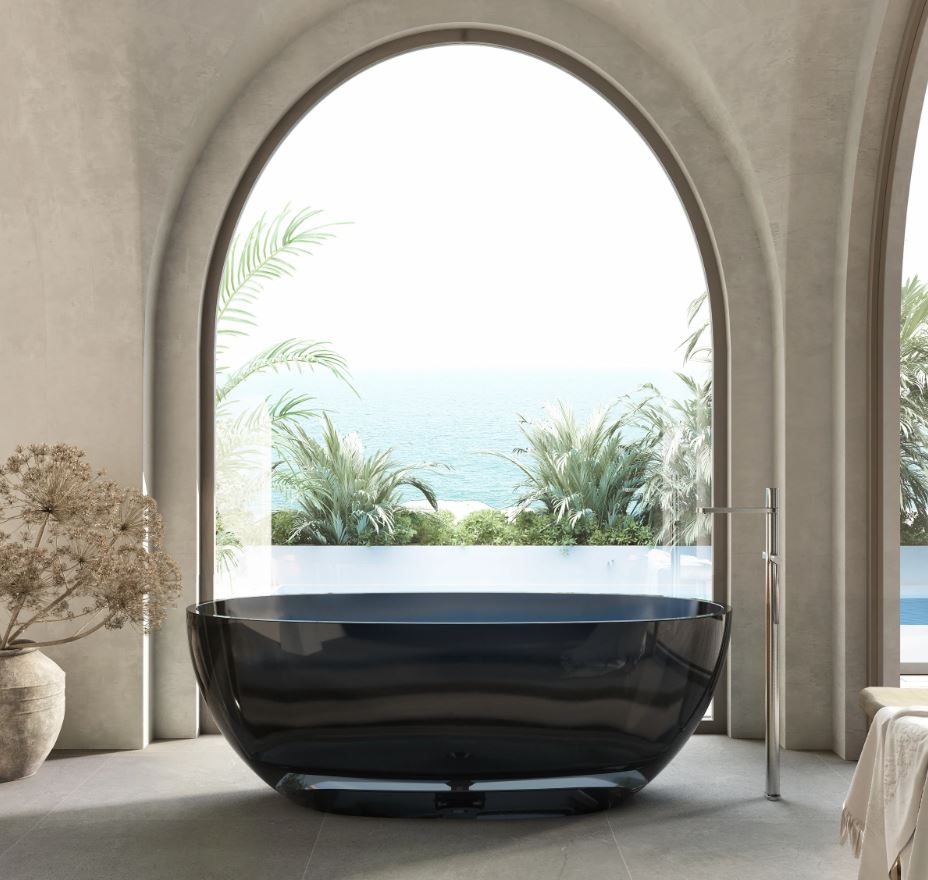
Stone resin sometimes called solid surface or composite stone occupies the middle ground between acrylic and natural stone. It's made from a mixture of crushed stone particles (often quartz, limestone or marble aggregate) bound together with high-grade resin, then formed into a bathtub shape.
What it does well
Stone resin has a genuinely convincing weight and feel. Running your hand along the interior of a quality stone resin tub, you'd struggle to immediately identify it as composite rather than natural stone. Heat retention is substantially better than acrylic water stays warm considerably longer, making for a more comfortable extended soak. The surface is non-porous, requires no sealing, and is highly resistant to staining. It's also available in a wide variety of forms including matte finishes that look sophisticated in contemporary bathrooms.
From an installation standpoint, stone resin is manageable — heavy enough to feel substantial, but light enough that most existing floor structures can handle it without reinforcement.
Where it falls short
The core limitation of stone resin is that it is, at its heart, a manufactured product. Every tub of the same model looks identical there's no variation, no veining, no character that distinguishes your bathtub from the one in the next suburb. High-quality stone resin products can be very beautiful, but they lack the irreducible individuality of natural stone.
Stone resin is also susceptible to impact damage in ways that natural stone is not. A hard knock dropping a heavy shampoo bottle, for instance can chip or crack the surface in a way that's difficult to repair invisibly. Repairs are possible but typically visible on close inspection.
In the Australian market, quality stone resin freestanding bathtubs range from $3,000 to $10,000. Lifespan sits around 20–30 years in normal use, making it a solid mid-term investment but not quite a once-in-a-lifetime purchase.
Best suited to: contemporary bathrooms, buyers who want a premium look at a lower entry point than natural marble, renovations where floor reinforcement isn't practical.
Cast Iron Bathtubs
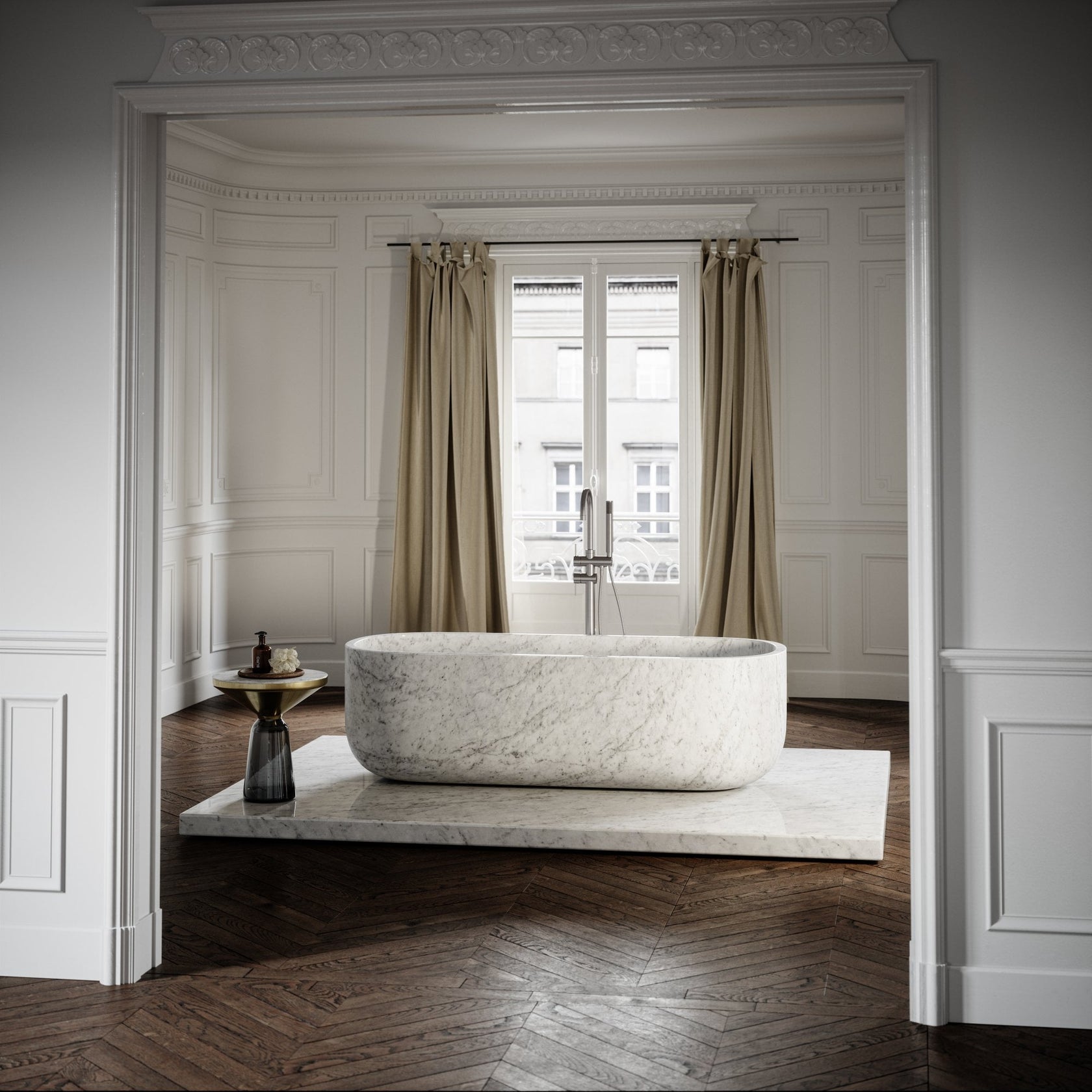
Cast iron is the heritage choice the material that defined luxury bathrooms for the better part of a century before synthetic alternatives arrived. It's made by pouring molten iron into moulds, then coating the interior surface with vitreous enamel effectively a thin layer of fused glass to create a smooth, non-porous bathing surface.
What it does well
Cast iron's reputation rests primarily on its thermal performance, and that reputation is well earned. The material's density and mass mean it holds heat exceptionally well — once a cast iron tub is filled with hot water, it retains that temperature far longer than acrylic or stone resin. It's also extraordinarily durable: a cast iron tub installed properly can genuinely last 50 to 100 years. The vitreous enamel surface, if cared for properly, resists scratching, staining and chemical damage. And there's a tactile solidity to cast iron — the sound of water, the feel of the surface — that no synthetic material has replicated.
Where it falls short
Cast iron is not a material that's readily available in Australia. It's predominantly manufactured in Europe and the United States, which means import costs, freight logistics and longer lead times are all part of the equation. Realistically, a quality new cast iron freestanding bathtub will cost between $4,000 and $12,000 or more by the time it reaches your bathroom in Australia significantly more than the entry-level figure you might see quoted on international sites.
The weight is also a major practical consideration. A standard cast iron freestanding bathtub weighs between 150kg and 250kg, meaning floor reinforcement is almost always required. When you add that structural cost to the purchase and freight price, the gap between cast iron and an entry-level marble bathtub narrows considerably.
When the enamel chips and over decades of use, it will chip repairs are visible and the exposed iron underneath is vulnerable to rust. Full re-enamelling is possible but expensive, typically starting around $800–$1,500 for a professional job.
Aesthetically, cast iron has a relatively restricted palette. You're largely working with solid white, off-white or black. There's no natural variation, no veining, no organic character. Cast iron looks handsome in the right setting, but it reads as industrial and utilitarian beside natural stone.
Best suited to: heritage or period home bathrooms, buyers prioritising thermal performance and longevity, and those prepared for the lead times and logistics involved in importing.
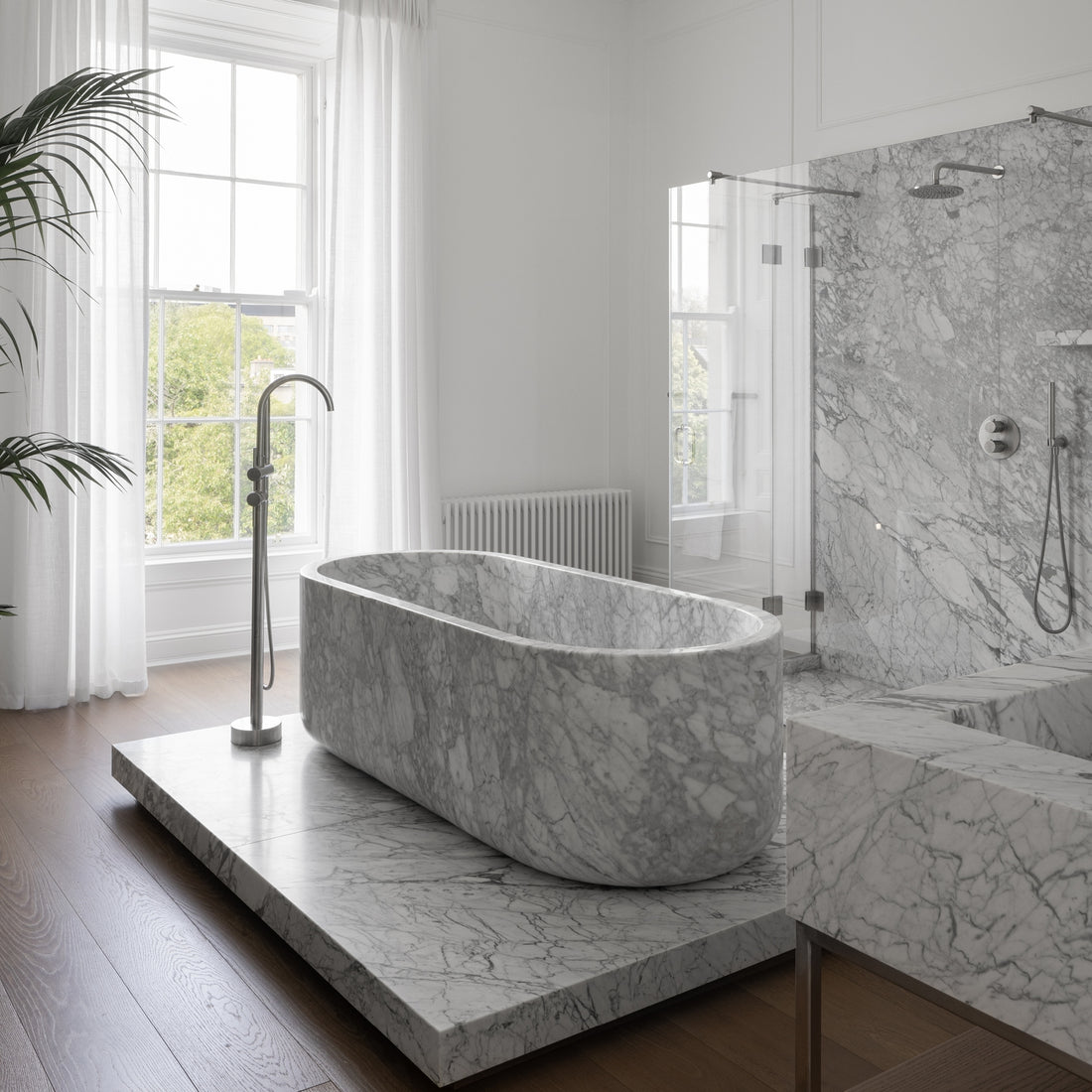
A natural marble bathtub is carved from a single solid block of stone quarried, transported, CNC machined to precise dimensions and hand-finished. Every piece is geologically unique. The veining, the colour variation, the surface character none of it can be replicated, manufactured or repeated. This is not a design choice so much as a statement about permanence.
Heat retention
Marble's thermal mass means it retains heat for extended periods significantly longer than acrylic and broadly comparable to cast iron for most practical bathing purposes. There's an additional sensory quality that statistics don't capture: the way honed or polished marble feels against skin at temperature is genuinely distinct from any other material. It warms gradually and holds that warmth.
Durability and lifespan
A natural marble bathtub, properly installed and maintained, has no defined lifespan. The stone will outlast the bathroom it's installed in, the house around it, and almost certainly its owner. Ancient marble structures that have been exposed to millennia of weather remain structurally intact a sealed and sheltered domestic bathtub is far less demanding an environment. This is not a product you replace. It's a fixture you inherit.
Marble is hard and scratch-resistant in normal domestic use. It does not flex under load. The surface will not craze, yellow or degrade the way synthetic materials do. With annual sealing and proper cleaning, a marble bathtub purchased today should be in identical condition — or better, with a refined patina in 40 years.
Weight and installation
This is the material's most significant practical consideration. Natural marble bathtubs weigh between 300kg and 700kg depending on size and thickness. This requires a structural assessment before purchase to confirm your floor can carry the load. In most new builds, and many ground-floor renovations, this is straightforward. In existing upper-floor bathrooms, some reinforcement is typically required. It's a solvable problem but it needs to be planned for before the bathtub is ordered, not after it arrives.
Aesthetics
This is where marble is simply in a different category to every other material on this list. The veining in a slab of Calacatta Viola deep purple and gold moving through white stone is not something a manufacturer can design. It formed over millions of years under specific geological conditions and exists nowhere else in exactly that configuration. When you order a marble bathtub, you are ordering an object that is genuinely one of a kind.
The range of marble available means the aesthetic palette is also far broader than cast iron or stone resin. Carrara offers classic white restraint. Travertine brings warmth and texture. Black Marquina is dramatic and modern. Onyx, when backlit, becomes almost luminous. These are not colourways they are different materials with entirely different personalities.
Maintenance
Marble requires more active care than synthetic materials, but less than its reputation suggests. The essentials are simple: seal the surface every 12–24 months using a dedicated stone sealer (a 30-minute DIY job), clean with pH-neutral products only, and wipe the surface dry after use in hard water areas. That's the full maintenance programme. Acid-based cleaners anything containing vinegar, citrus or bleach should never be used on marble, as they etch the surface. Beyond that, marble is not fragile. It's been used in bathrooms for thousands of years.
Cost
Natural marble bathtubs in Australia start from around $12,000 for standard-sized pieces in Carrara or Travertine, rising to $35,000 and beyond for large custom pieces in rare stones like Calacatta Viola or Onyx. Installation adds a further $3,000–$8,000 depending on the complexity of the project and whether floor reinforcement is required.
That's a significant investment by any measure. But divided across a 40-plus year lifespan, the annual cost of ownership is considerably lower than replacing an acrylic bathtub twice in the same period at $900–$4,500 per replacement cycle and far more competitive with cast iron than most buyers realise, particularly when Australian import and freight costs are factored in.
Best suited to: principal bathrooms in forever homes, new builds, renovation projects where the bathroom is designed to be a long-term asset, buyers who understand the difference between cost and value.

The Honest Comparison — Side by Side
| Factor | Acrylic | Stone Resin | Cast Iron | Natural Marble |
|---|---|---|---|---|
| Entry price (AUD) | $900 | $3,000 | $4,000 | $12,000 |
| Heat retention | ★★☆☆☆ | ★★★☆☆ | ★★★★★ | ★★★★☆ |
| Durability | ★★☆☆☆ | ★★★☆☆ | ★★★★☆ | ★★★★★ |
| Aesthetics | ★★☆☆☆ | ★★★☆☆ | ★★★☆☆ | ★★★★★ |
| Maintenance | ★★★★★ | ★★★★☆ | ★★★☆☆ | ★★★☆☆ |
| Installation ease | ★★★★★ | ★★★★☆ | ★★☆☆☆ | ★☆☆☆☆ |
| Lifespan | 10–15 yrs | 20–30 yrs | 50+ yrs | Lifetime |
| Unique appearance | No | No | No | Yes |
Which One Should You Actually Choose?
Choose acrylic if you're renovating to sell, working to a tight budget, or fitting out a secondary bathroom where practicality outweighs aesthetics. It does the job it's designed to do.
Choose stone resin if you want a significant step up from acrylic without the weight and installation complexity of natural stone. It's a smart choice for contemporary bathrooms where the design language favours clean lines over natural variation.
Choose cast iron if you're restoring a period home or heritage property where the aesthetic demands it but go in with clear eyes about the import logistics, lead times and true Australian landed cost before comparing it against other options.
Choose natural marble if the bathroom you're creating is one you intend to keep for life and if you understand that you're not just buying a bathtub. You're buying a piece of natural stone that will never look exactly like another, will improve in character over decades, and will still be in perfect condition when the rest of the bathroom has been renovated twice over.
Our Marble Bathtub Range
At Elsa Home & Beauty, our marble bathtub collection is CNC fabricated from solid natural stone across a range of marble types including Carrara, Travertine, Calacatta, Calacatta Viola and Onyx. Standard and custom sizes are available, with delivery across Australia.
Prices start from $12,000. Explore the full collection here: https://www.elsahomeandbeauty.com.au/collections/marble-bathtubs
If you're unsure which marble type suits your bathroom or want to discuss sizing and installation requirements, contact our team before purchasing we're happy to walk you through the options.


