


Designing a dining room is about far more than selecting a beautiful table and a set of chairs. A well-arranged dining space balances comfort, proportion, and visual harmony, creating an environment that feels inviting, functional, and effortlessly elegant. In luxury interiors, the dining room often becomes a central gathering point, where everyday meals and special occasions coexist within the same carefully considered space.
A successful dining room layout responds to how you live, how the room flows, and how each element interacts with the surrounding architecture. When proportion, spacing, and material choices are thoughtfully aligned, the dining area feels generous and refined rather than crowded or purely decorative. The following design principles will help guide you toward a dining room that feels both timeless and tailored.
The Essentials of a Well-Designed Dining Room
Before choosing a dining table or chairs, it is important to understand the spatial requirements of the room itself. A dining room should allow people to move comfortably around the table, sit with ease, and enjoy the space without feeling restricted.
Key considerations include how much circulation space is required around the table, how many people you plan to seat regularly, and how the dining area connects visually and physically to adjacent rooms. Clarifying these elements early ensures that furniture choices enhance the room rather than overwhelm it.
Space and Proportion: The Foundation of Luxury Interiors
Luxury dining rooms never feel tight or overfilled. Correct proportions are essential to creating a sense of ease and flow. As a general guideline, allow approximately 90 cm of clear space around all sides of the dining table so chairs can be pulled out comfortably and guests can move freely.
Along the length of the table, each person should have around 60 cm of space, with 70–75 cm per seat creating a more generous, relaxed feel. This spacing prevents chairs from touching and allows diners to sit comfortably without feeling confined.
In medium-sized dining rooms, a table seating six to eight people typically works best, paired with chairs that offer comfort without excessive bulk. In larger rooms, longer tables or generous round designs can be introduced, often complemented by sideboards or console furniture to visually anchor the space.
Choosing the Right Dining Table Shape for Your Space
Once proportions are established, table shape plays a significant role in how the dining room functions and feels. Rectangular tables suit longer rooms and formal layouts, while round tables encourage conversation and soften angular spaces. Oval tables offer a balance between the two, maintaining flow while reducing sharp corners.
The goal is to ensure the table complements the room’s architecture rather than competing with it. A well-chosen shape enhances circulation and reinforces the overall design language of the interior.
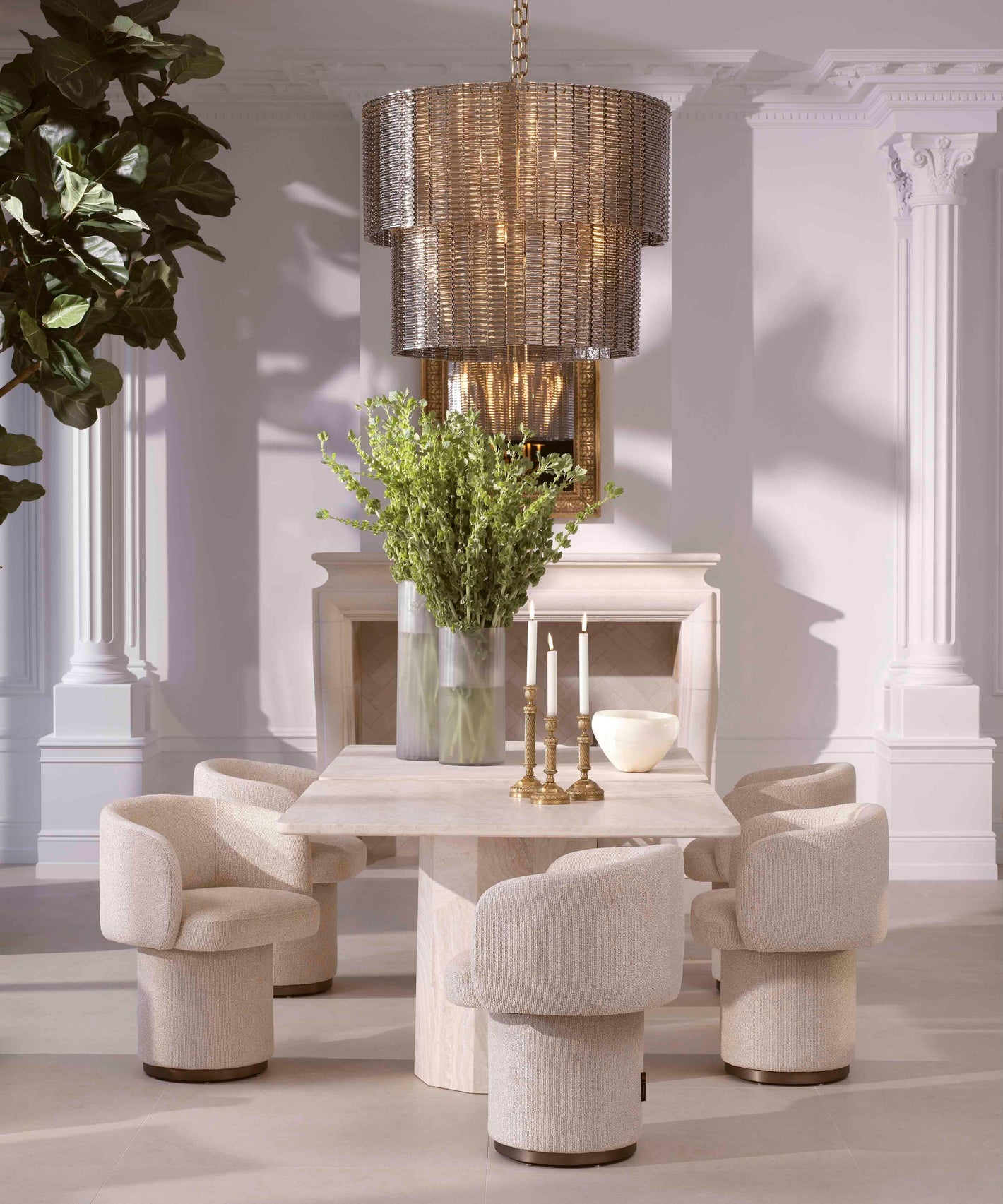
Matching Dining Furniture to Interior Style
A cohesive dining room is achieved when furniture aligns naturally with the surrounding interior style.
In modern spaces, lighter structures and refined silhouettes work best. Marble, glass, or streamlined timber tables pair well with upholstered or leather chairs on slim legs, keeping the room visually open. Neutral palettes with subtle contrast feel calm and contemporary.
Classic or more formal interiors benefit from substantial tables in marble or wood, often with sculptural bases. High-back chairs, rich fabrics, and warm finishes introduce depth and a sense of tradition.
In mixed or contemporary interiors, combining materials adds visual interest. Sculptural table bases paired with softer, textured chairs create a curated look that feels intentional rather than matched.
Selecting Dining Chairs for Marble, Glass, and Wood Tables
Dining chairs play a crucial role in both comfort and aesthetics, and their relationship to the table material should feel balanced.
Marble dining tables pair beautifully with upholstered chairs, slim metal frames, or simple timber designs that soften the stone’s visual weight. Chairs with clean lines allow the marble to remain the focal point.
Glass tables benefit from sculptural or upholstered chairs, as the transparency of the tabletop places more emphasis on chair form and texture. Slim or curved silhouettes prevent the space from feeling heavy.
Wood tables offer the most flexibility, pairing well with upholstered, leather, woven, or timber chairs depending on the desired mood. Mixing tones can add depth, as long as a unifying element such as leg finish or material is repeated.
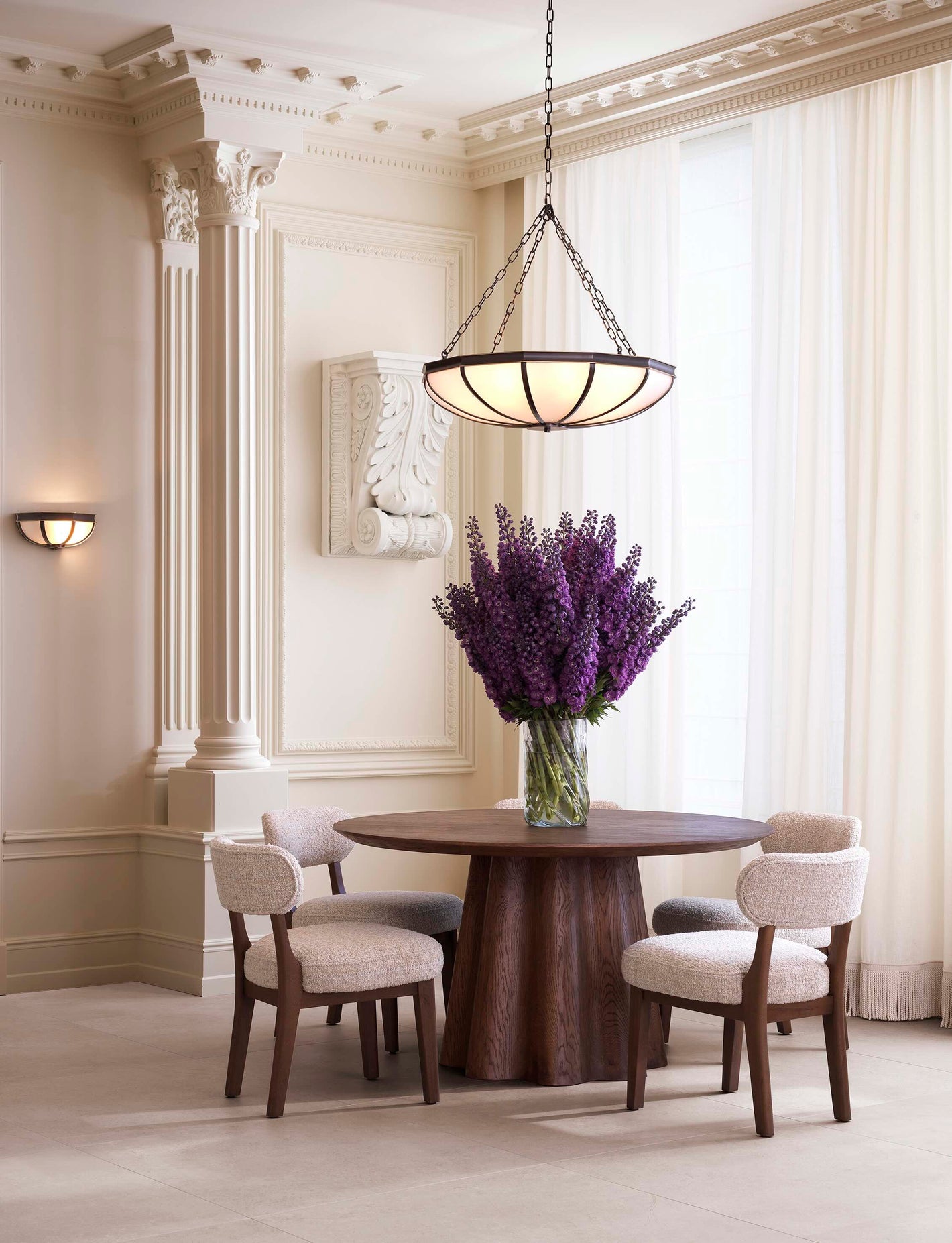
Creating Flow and Visual Balance in the Dining Area
A well-arranged dining room considers how the space is experienced as a whole. Lighting, rugs, and surrounding furniture should support the dining zone without competing with it. A rug should extend beyond the table edges to allow chairs to slide easily, while lighting should be centred and scaled to the table size.
Sideboards, artwork, and decorative elements should enhance the room’s balance, providing visual weight where needed while maintaining a sense of openness and flow.
Caring for Luxury Dining Furniture
Maintaining dining furniture ensures it remains beautiful over time. Marble surfaces should be cleaned gently with mild soap and water, avoiding acidic or abrasive products. Wood furniture benefits from regular dusting and protection from heat and direct sunlight. Glass surfaces should be cleaned with soft cloths to prevent scratches, while upholstered chairs require regular vacuuming and prompt attention to spills.
Thoughtful care allows materials to age gracefully, adding character rather than wear.
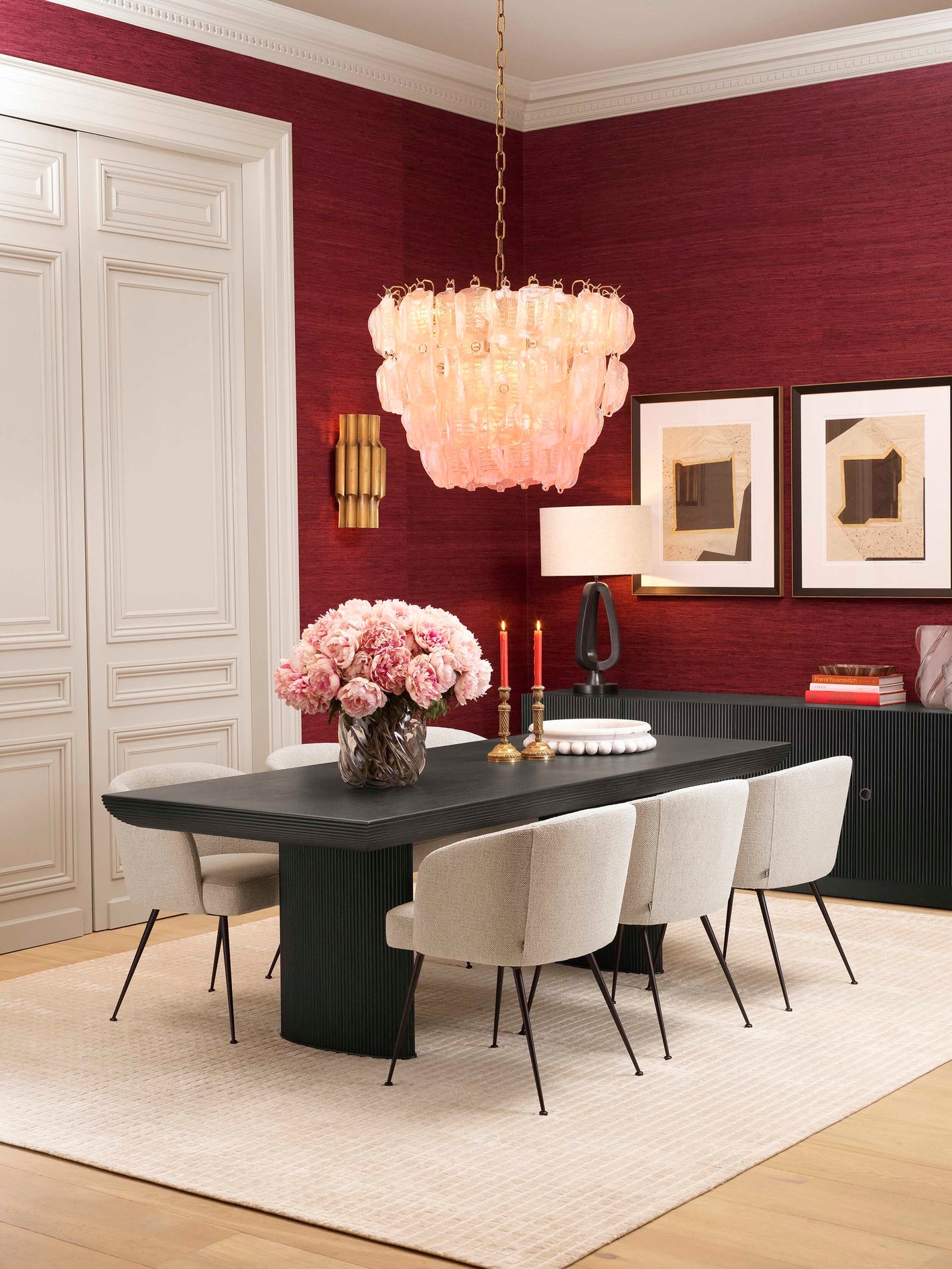
Designing a Dining Room That Feels Timeless
A well-designed dining room is not driven by trends but by proportion, comfort, and material integrity. When furniture is chosen with intention and arranged with care, the space feels welcoming, balanced, and enduring.
By focusing on layout, scale, and harmony, your dining room becomes more than a place to eat. It becomes a setting for connection, conversation, and everyday rituals, shaped by thoughtful design and timeless principles.


