


Few materials carry the weight of history and the relevance of the present moment simultaneously. Travertine does both. Formed over thousands of years as calcium carbonate deposits build up around mineral springs and underground rivers, this sedimentary stone has surfaced in some of the world's most enduring architecture — from the Roman Colosseum to the interiors of today's most considered luxury homes. Its return to prominence in contemporary design is not a trend. It is a recognition of what the material has always offered: warmth, depth, natural variation, and a longevity that manufactured surfaces simply cannot match.
At Elsa Home & Beauty, we import high-quality travertine primarily sourced from Italy, selecting each piece for its character, colour consistency, and overall quality ensuring only the finest material reaches our clients, whether for residential or commercial projects.
What Makes Travertine Distinctive
The defining characteristic of travertine and its most misunderstood quality is its natural voids. The pitted holes and channels that run through the stone are formed during the geological deposition process itself. They are not imperfections. They are the material's identity.
These voids give travertine a directionality and surface depth that no engineered material can credibly replicate. Depending on how the stone is finished, they can be filled for a smoother, more refined appearance, or left open to preserve the raw, textural quality that makes travertine so architecturally expressive.
Beyond its appearance, travertine is heat and moisture resistant, durable in both high-traffic and outdoor environments, and critically it ages gracefully. Over time it develops a rich patina that deepens its character rather than diminishing it. A surface that has been genuinely lived in takes on a quality that manufactured stone, engineered to show no age, can never achieve.
Why Travertine Is Being Specified Again
Travertine's renewed presence in luxury interiors is both cyclical and structural. Enough time has passed since its last widespread use that it no longer carries the associations of a previous era. More importantly, its warm ivory-to-walnut colour range sits precisely within the natural, earthy palettes that have dominated premium interior design but unlike trend-driven finishes, travertine's warmth is intrinsic to the material. It is not a manufacturer's colour decision. When palettes shift, it will not look dated.
Today, travertine is being specified across kitchens, bathrooms, entrance halls, feature walls in living areas, and even bedrooms. It is one of the few natural stones that performs across multiple surface types, holds its visual register across both warm and cool palettes, and improves with age. Each application, however, has distinct and specific requirements.
Understanding Finishes: Choosing the Right Surface for Each Application
The finish you select changes both the character and the practical performance of travertine. Getting this decision right is as important as the decision to use the stone at all.
Honed and Filled produces a smooth, matte surface with the stone's natural voids grouted or resin-filled. The result reads more like conventional stone — refined, even, and well-suited to formal settings, kitchen countertops, and bathroom floors where a clean surface is a practical necessity. This is the standard specification for food preparation and wet area surfaces.
Honed and Unfilled retains the stone's natural voids, leaving them open for a more textural, directional appearance. The surface is matte but visually alive the kind of finish that reads differently at different times of day as light moves across it. This is the version that separates a considered travertine interior from a generic one, and it excels in feature walls, entrance halls, dry decorative flooring, and vanity surrounds outside the wet zone.
Tumbled travertine offers rounded edges and a deliberately aged, weathered surface suited to rustic, traditional, or farmhouse-style settings where an organic, less refined aesthetic is the goal.
Sawn leaves the stone's natural surface intact with minimal processing, creating a tactile, raw finish suited to both interior and exterior spaces where the priority is authentic material presence.
Filled vs. Unfilled: The Decision That Changes Everything
Of all the specification choices in a travertine project, the filled versus unfilled decision is the most consequential and the one most often made without enough consideration.
Most travertine available in the residential market arrives pre-filled. This is the version most clients encounter in hotels, spas, and showrooms. It is also the version that reads as least distinctive. Unfilled travertine has an entirely different visual character. The open voids give the stone a clear sense of how it was formed. Against smooth plaster walls or the flat surfaces of adjacent timber joinery, the surface tension it creates is something filled stone simply cannot replicate.
The practical parameters are clear: unfilled travertine should not be specified for food preparation surfaces or continuously wet areas. In every other context feature walls, dry flooring, bedroom headboards, spa areas outside the shower zone it is the more resolved and architecturally expressive choice.
Cuts of Travertine: Vein Cut vs. Cross Cut
How travertine is cut from the block determines the visual pattern of the surface, and this decision is worth making deliberately.
Vein Cut slices along the natural layers of the stone, revealing dramatic linear striations that showcase the material's stratified formation. It is particularly well-suited to feature walls and statement applications where the visual energy of the stone should be prominent.
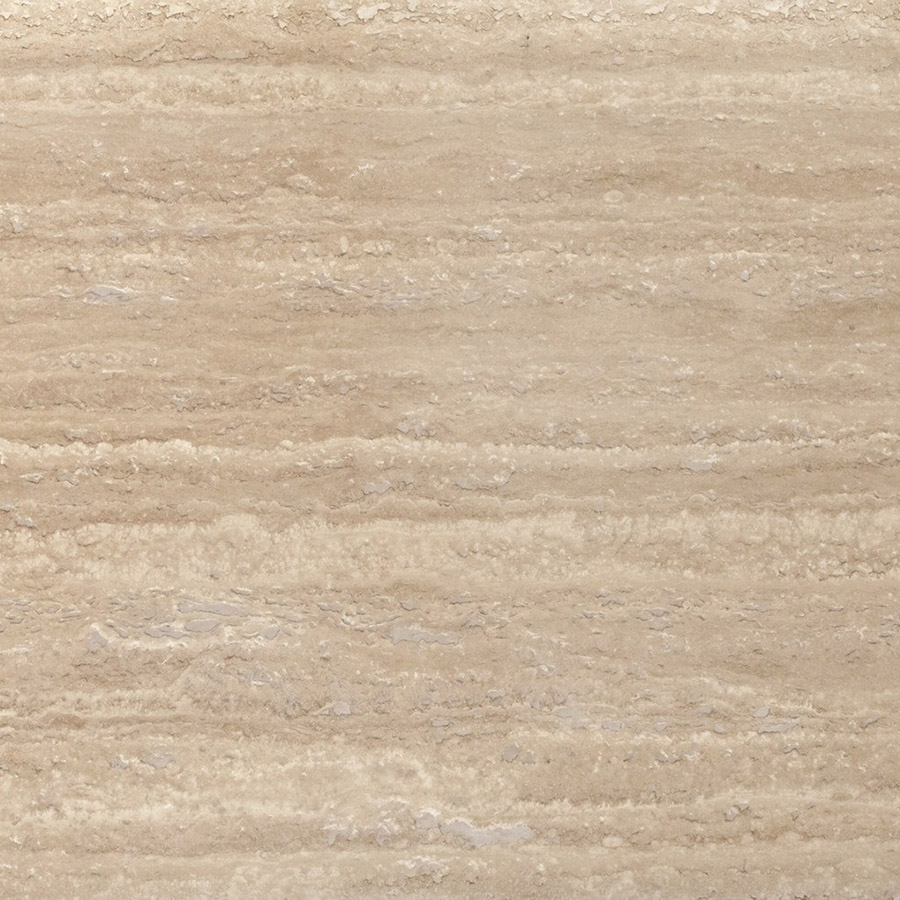
Cross Cut slices across the natural layers, producing softer, cloud-like patterns with a more uniform and gentle appearance. This is the preferred cut when a subtler, less directional reading is desired flooring, large wall cladding, or surfaces where the stone should recede rather than lead.
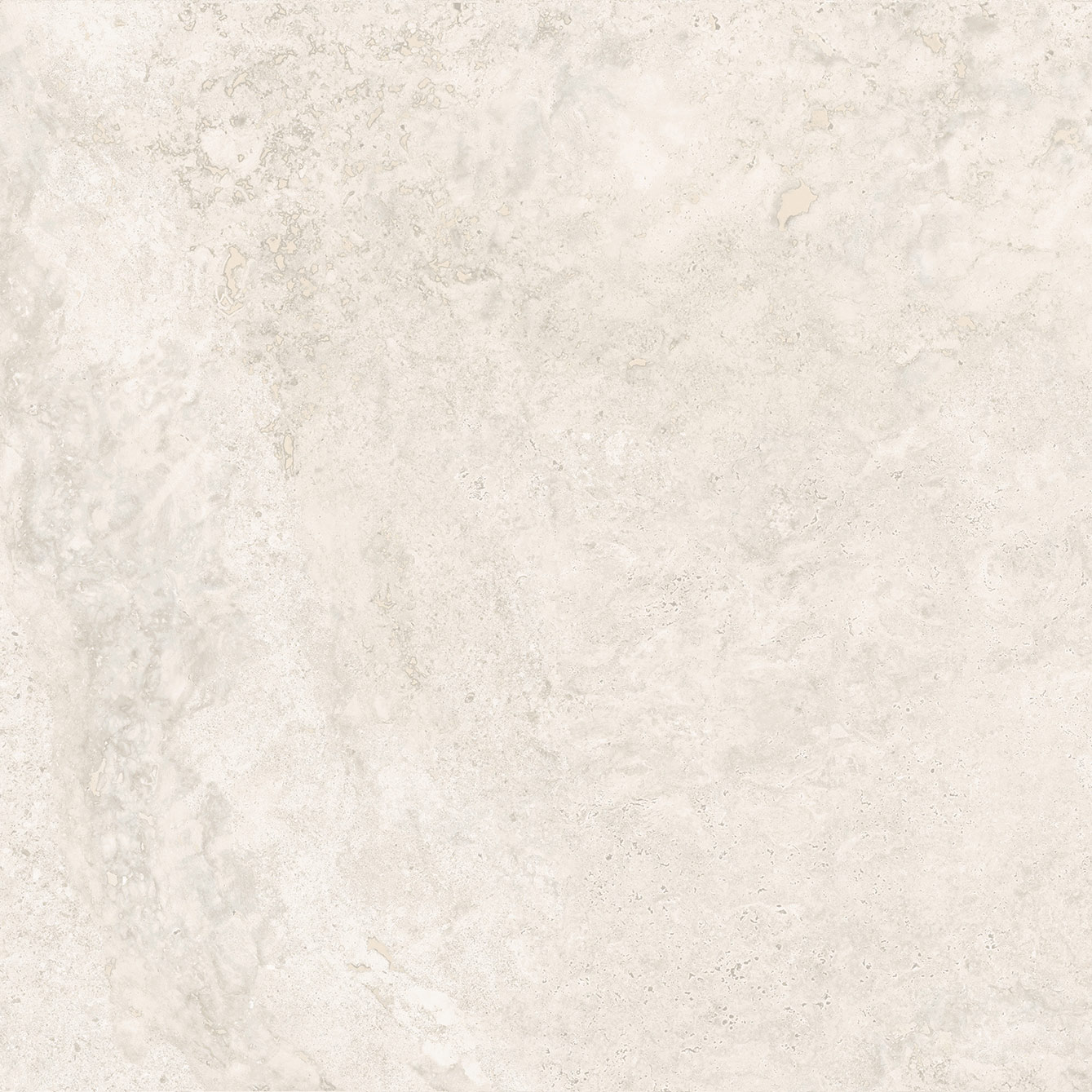
Travertine in Kitchens
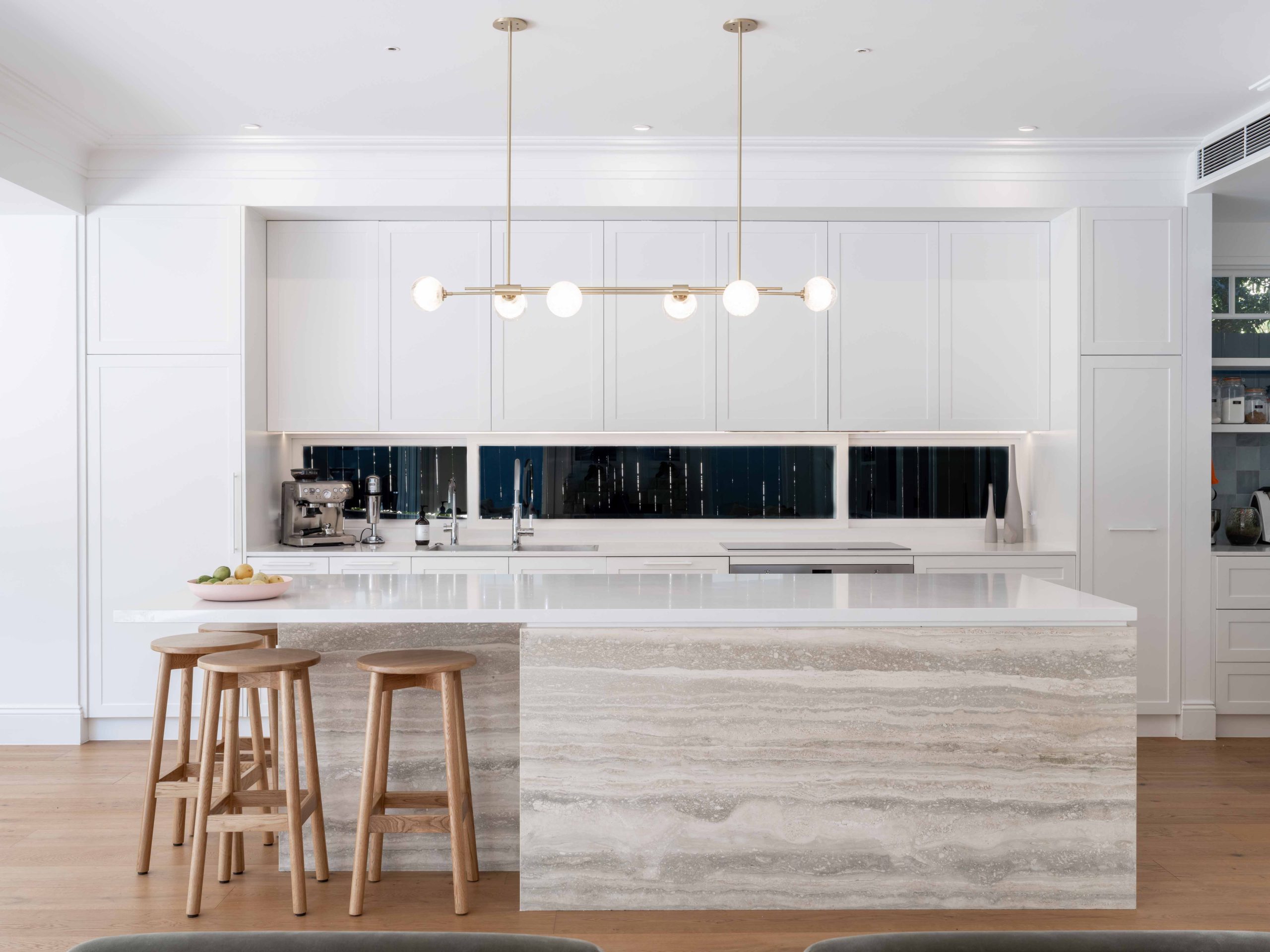
For kitchen countertops and island surfaces where food preparation takes place, filled and honed is the correct specification. The smooth, void-free surface does not trap food or bacteria, and the matte finish avoids the reflectivity that highlights every fingerprint and watermark.
The maintenance reality is worth stating plainly: travertine will etch if acidic liquids citrus juice, wine, vinegar are left on the surface without prompt attention. This is true of any natural calcium-based stone in a working kitchen, and it is not unique to travertine. A properly sealed travertine worktop that has been genuinely used develops a patina over time that reads as luxurious in a way that engineered surfaces, designed never to show age, cannot.
Paired alongside warm timber island joinery, travertine brings a material depth and surface variation to a kitchen that quartz or laminate cannot produce at any price point.
Travertine in Bathrooms
The bathroom is where travertine has its longest modern specification history, and for good reason. Its warmth and natural variation translate exceptionally well into a space that benefits from both visual calm and material depth simultaneously.
For bathroom floors, filled and honed is the standard but finish must account for slip resistance when wet. A fine hone or lightly brushed surface provides adequate traction without compromising the stone's appearance. Polished travertine floors in wet areas are not recommended: the combination of polish and water creates a surface that is simultaneously slippery and difficult to keep clean.
For shower walls and continuously wet surfaces, sealing is the critical variable. Travertine in a shower receives sustained water exposure; without a penetrating impregnator sealer applied at installation and reapplied every 12 to 24 months the stone will absorb moisture, discolour, and deteriorate over time.
Outside the wet zone, unfilled travertine becomes an option and a compelling one. Used on vanity surrounds, feature walls within the bathroom, or in spa and massage areas, the open voids and textural surface give the stone a quality that the filled version cannot match.

Travertine for Feature Walls, Entrance Halls, and Living Spaces
Travertine is increasingly specified beyond wet areas and this is where unfilled finishes, vein cuts, and large-format slabs deliver their strongest results. A full-height travertine feature wall in a living space, entrance hall, or bedroom brings a material presence that is architectural rather than decorative.
The key is giving the stone enough surface area to be legible as the room's primary material. Travertine used as a single accent element among many competing finishes reads as an addition. Travertine used as the room's material foundation with all other choices selected to sit behind it defines the space entirely.
What Pairs Well with Travertine
Travertine's warm ivory-to-walnut colour range pairs most naturally with a specific set of materials. Warm oak or walnut brings a wood grain that reads against stone veining without competing with it. Unlacquered or brushed brass harmonises tonally with the stone's warmth. Natural linen and bouclé textiles offer soft counterpoints to the stone's hardness. Warm white or off-white plaster walls sit in the same tonal register as the stone, making it feel as though the material belongs to the space rather than contrasting with it.
Pairings that tend to resolve less well: cool grey stones, where the tonal contrast can feel unresolved; chrome or polished nickel hardware, which is tonally too cool for travertine's warmth; and strong colour applied extensively across the room, where travertine functions best as a grounding base material rather than a backdrop for maximalist decisions.
Maintenance and Longevity
Correctly specified and properly maintained travertine has no defined replacement cycle. Unlike engineered stone or composite surfaces which have finite lifespans before they degrade in appearance and require removal travertine installed well will outlast multiple rounds of renovation and trend-driven change. This makes it not only a sound aesthetic choice but a genuinely sustainable one: a material that lasts generations embeds its environmental cost once, rather than repeatedly.
Day-to-day maintenance is straightforward. Clean with a pH-neutral stone cleaner never acidic, bleach-based, or abrasive products. Wipe up spills promptly, particularly in kitchens. Re-seal on a schedule appropriate to the application and usage intensity. Beyond that, travertine asks very little and gives a great deal.
Travertine Applications at a Glance
Travertine performs across a wide range of applications, and the specification simply needs to match the demands of each surface:
Flooring — suitable for interior and exterior use; durable in high-traffic areas; honed and filled for wet zones; unfilled for dry decorative applications.
Wall Cladding and Feature Walls — one of the strongest applications for unfilled travertine; the natural voids become a textural asset on vertical surfaces.
Kitchen Countertops and Islands — filled and honed, properly sealed; will develop a living patina with use.
Bathroom Surfaces — floors, walls, vanity surrounds, and shower enclosures each have distinct finish and sealing requirements; specification must account for wet versus dry zones.
Outdoor Spaces — heat resistant and naturally cool underfoot; well-suited to pool surrounds, patios, and external cladding in warmer climates.
Explore Elsa Home & Beauty's Travertine Collection
At Elsa Home & Beauty, our travertine selection spans a range of finishes, cuts, and colour tones to suit projects of every scale and style. We work closely with architects, interior designers, and homeowners to ensure the material we supply meets the aesthetic, practical, and durability requirements of each individual project.
From feature walls in residential homes to large-scale commercial interiors, travertine from Elsa Home & Beauty brings lasting elegance and considered materiality to any design. Get in touch with our team to discuss your project and find the right travertine for your space.


