


A travertine dining table is more than a surface for meals — it’s an architectural statement carved from natural limestone formed in mineral springs over thousands of years. Defined by its soft tonal movement, subtle veining, and organic texture, travertine introduces warmth and permanence into Australian homes.
Unlike trend-driven materials that come and go, travertine furniture holds cultural and architectural significance. From the ancient stonework of the Colosseum in Rome to the restrained modernism of Mies van der Rohe, travertine has long represented durability and quiet luxury. In today’s interiors, that same timeless quality translates beautifully into dining spaces that feel grounded, refined, and enduring.
Australians gravitate toward travertine dining tables for three key reasons:
-
Each slab is naturally unique
-
The stone offers impressive durability when sealed
-
The aesthetic balances modern minimalism with classic elegance
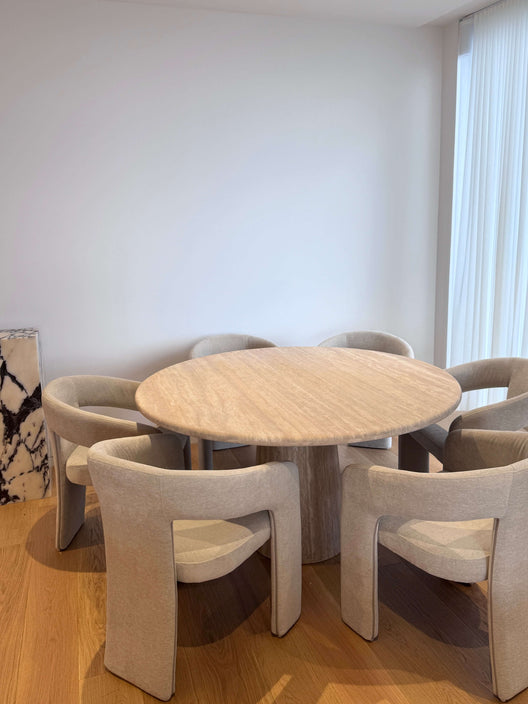
Types and Styles of Travertine Dining Tables
Travertine dining tables are available in a wide range of silhouettes and material combinations, allowing designers and homeowners to tailor the look to their space.
1. Round Travertine Dining Tables
Perfect for compact dining areas or open-plan living, round tables soften a room’s geometry and encourage conversation.
2. Rectangular and Square Designs
Ideal for family homes and entertainers, these shapes maximise seating while creating a strong architectural presence.
3. Solid Travertine Slab Tables
Crafted from substantial stone blocks or plinth bases, these pieces emphasise visual weight and permanence.
4. Mixed-Material Travertine Furniture
Stone tops paired with timber, steel, or brass bases create contrast and depth — a popular choice in contemporary Australian interiors.
5. Sculptural & Minimalist Forms
Clean lines, geometric bases, and monolithic proportions reflect the growing demand for functional yet artistic furniture.
Premium Australian retailers such as Elsa Home & Beauty and Zaffero frequently showcase travertine dining tables that merge structural integrity with refined design.
Neutrality as a Sophisticated Foundation
In high-end interiors, neutrality is not the absence of colour — it is a strategic design tool. Travertine offers what designers often describe as “textural calm.”
Where marble can dominate with bold, high-contrast veining, travertine provides tonal depth and subtle sedimentary movement. Its beige, ivory, taupe, and walnut hues adapt seamlessly to changing palettes, making it a versatile anchor for dining rooms styled with statement lighting, upholstered chairs, or layered rugs.
For designers specifying travertine furniture, this adaptability ensures longevity. As trends evolve, the table remains relevant.
The Biophilic Connection and Natural Origins
Travertine forms when calcium carbonate precipitates from mineral-rich hot springs. The small cavities visible within the stone — known as its vacuolar structure — are remnants of trapped gas bubbles during formation.
This geological history gives travertine dining tables an authentic connection to nature. In homes embracing biophilic principles, stone surfaces introduce tactile and visual variety that synthetic materials simply cannot replicate.
Another benefit lies in thermal mass. Travertine remains naturally cool to the touch, even in sunlit Australian homes, subtly reinforcing the sensory experience of natural stone.
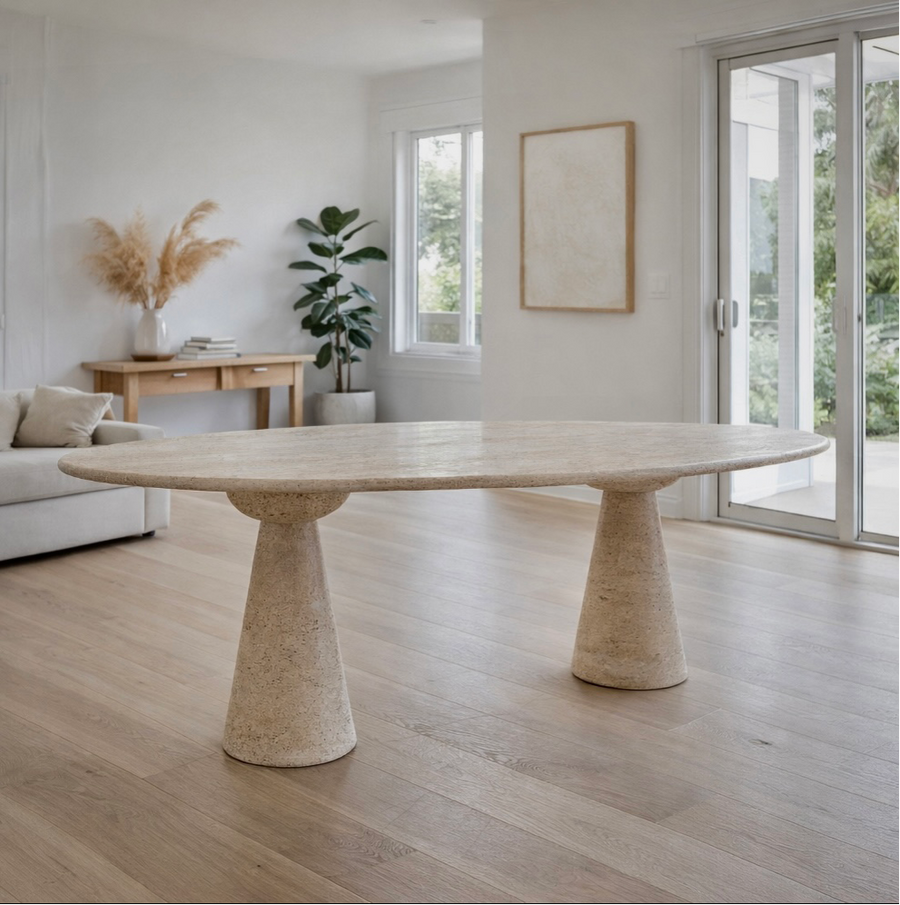
Structural Integrity and Visual Permanence
In an era of fast furniture and lightweight composites, solid stone communicates stability. A travertine dining table carries what designers call “visual gravity.”
The weight and density of the material anchor a dining space, making the room feel intentional and permanent. Whether supported by a block plinth base or a sculptural pedestal, travertine furniture delivers a psychological sense of durability that glass or veneer cannot achieve.
For homeowners investing in long-term quality, this permanence is a major appeal.
The “Filled and Honed” Finish: The Interior Standard
Not all travertine finishes are suitable for dining use. For horizontal surfaces such as travertine dining tables, a filled and honed finish is strongly recommended.
-
Filled: Natural voids are sealed with colour-matched resin or cement to create a smooth, practical surface.
-
Honed: The stone is finished to a matte texture that absorbs light rather than reflecting it.
This specification enhances hygiene, prevents debris accumulation, and improves stain resistance — essential for busy households and entertainers.
The Science of Durability and Maintenance
Travertine is naturally porous, which means sealing is critical. When properly sealed:
-
It resists stains and moisture penetration
-
It tolerates moderate heat exposure
-
It maintains structural strength for decades
Routine care involves:
-
Wiping spills promptly
-
Using pH-neutral stone cleaners
-
Resealing periodically based on usage
With correct maintenance, travertine furniture ages gracefully rather than deteriorating.
A Bridge Between Design Eras
One of travertine’s greatest strengths is its ability to transcend stylistic periods. Because of its long architectural history, it pairs effortlessly with:
-
Mid-century silhouettes
-
Contemporary minimalist spaces
-
Classic European-inspired interiors
-
Modern Australian coastal aesthetics
A travertine dining table can sit comfortably beside boucle chairs, linen upholstery, or even bold postmodern lighting. This flexibility makes it a sound long-term design investment.
Benefits and Use Cases
Why Choose a Travertine Dining Table?
-
Naturally Unique – No two slabs share identical veining or pore patterns
-
Architectural Presence – Adds sculptural weight to a dining area
-
Versatile Aesthetic – Complements both modern and traditional interiors
-
Durable Luxury – With sealing, it withstands daily family use
Ideal Applications
-
Formal dining rooms
-
Open-plan kitchen and dining zones
-
Covered alfresco entertaining areas
-
Boutique hospitality or designer commercial spaces
Travertine Dining Table Trends for 2026 (Australia)
Emerging interior directions shaping Australian homes include:
-
Earth-Driven Colour Palettes – Creams, sands, and warm taupes
-
Material Contrast – Travertine tops paired with dark timber or brushed metal bases
-
Sculptural Minimalism – Monolithic pedestal and curved edge designs
-
Sustainably Sourced Stone – Increased demand for responsibly quarried materials
-
Functional Luxury – Pieces that combine aesthetics with everyday practicality
These trends reinforce travertine’s continued relevance in premium interiors.
Styling Advice for Travertine Furniture
To maximise the impact of a travertine dining table:
-
Pair with upholstered chairs to soften the stone’s solidity
-
Add linen runners or sculptural centrepieces to enhance texture
-
Layer with wool rugs for warmth and contrast
-
Balance cool stone surfaces with warm timber flooring
For alfresco areas, ensure the stone is sealed appropriately for outdoor conditions.


