


There's a moment in every home office renovation where the room either comes together or stays stuck. More often than not, it hinges on the desk the piece that anchors everything else, the surface you spend the most time looking at, and the object that most clearly signals what kind of space this is.
A marble desk changes that moment completely.
Not because marble is trendy (it isn't it has been the material of considered, lasting design for centuries). But because a marble desk brings a quality of presence to a home office that no laminate, veneer, or glass surface can replicate. The natural veining, the cool weight of the stone, the way it interacts with light throughout the day — these aren't aesthetic bonuses. They're the things that make a room feel genuinely curated rather than assembled.
The challenge isn't choosing marble. It's knowing how to build the room around it. Here's how to do that properly.
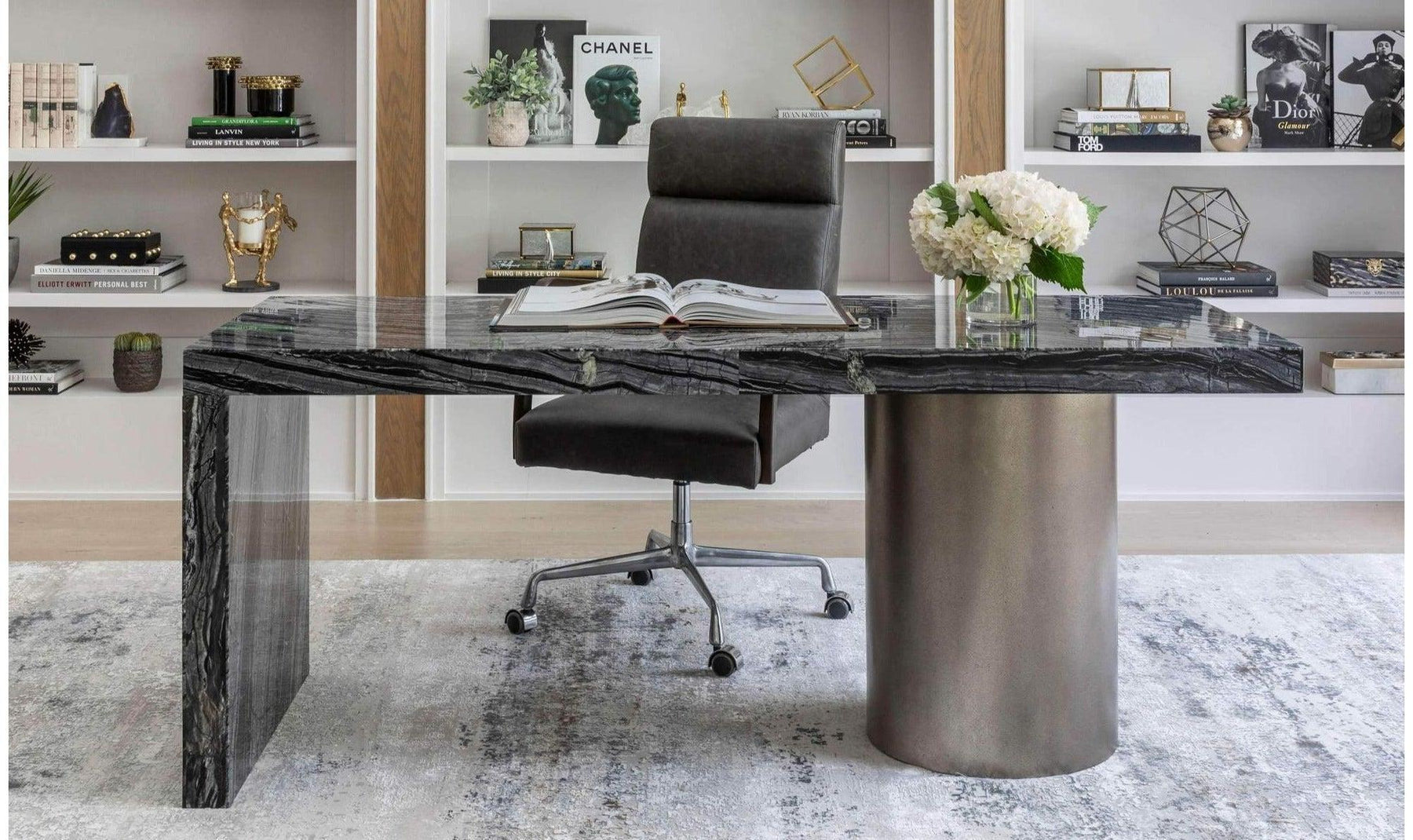
Start With the Stone: Choosing the Right Marble for Your Space
Before you think about chairs, lighting, or accessories, you need to understand what the stone itself is bringing to the room because not all marble reads the same, and the one you choose will shape every styling decision that follows.
White marble with dramatic veining — Calacatta, Carrara, and New York Marble fall into this family. These are bold, high-contrast stones that naturally become the focal point of any room. If you choose a desk in one of these marbles, keep the rest of the room restrained. Let the stone do the talking. White or warm grey walls, minimal shelving, and simple accessories. These stones work best in rooms with good natural light, which amplifies the contrast between the white ground and the dark veining.
Warm-toned marble — Calacatta Viola, with its distinctive purple and gold veining against a warm white ground, is a particularly striking choice for a home office because it reads simultaneously refined and creative. It suits warmer colour palettes: sandy walls, warm timber floors, brass or gold hardware. It photographs exceptionally well for anyone who uses their office as a backdrop for video calls or social content.
Earthy and textural marble — Travertine and similar stone types bring a quieter, more organic energy. The warm beige and ivory tones create a calmer visual environment, which some people find genuinely conducive to deep work. A travertine desk pairs beautifully with natural linen, warm timber shelving, and matte black or brushed brass fittings. It's the choice if you want a home office that feels more like a calm retreat than a power statement.
The principle is this: pick your stone first, then build the colour palette of the room around it. Trying to retrofit a marble desk into a room that wasn't designed with it in mind is how you get a space that feels disjointed.
The Chair: The Most Important Pairing Decision
The chair you pair with a marble desk matters more than most people realise because it will be in every photo, every video call, and every glance across the room. Get the pairing wrong and even a beautiful desk looks awkward.
For a minimal, contemporary look: A slim-profile office chair in genuine leather (warm tan, caramel, or black) against white or warm-veined marble creates a combination that feels elevated without being fussy. Avoid chairs with heavy padding and oversized proportions they compete visually with the desk rather than complementing it.
For a warmer, more editorial look: A boucle or linen upholstered accent chair pulled up to the desk can work beautifully if you're not running monitors or heavy computing equipment. This is increasingly popular in styled home offices where the desk serves both as a workspace and a visual centrepiece for the room.
For a Japandi or organic modern look: A natural timber and leather chair something with clean lines and visible wood grain against a travertine or warm-toned marble desk is one of the most cohesive pairings you can make. The warmth of the timber echoes the warmth of the stone, and the two materials feel like they belong together.
One rule across all of them: match your chair's metal finish to the rest of the room's hardware. If your desk lamp is brass, your chair's armrest caps should be brass (or at least warm-toned metal). If your shelving brackets are matte black, match that. Mixing metal finishes in a small room is one of the quickest ways to make a space feel unresolved.
Lighting: The Detail That Makes or Breaks Marble
Marble under bad lighting is a completely different material than marble under good lighting. The stone's natural depth, translucency, and veining are all activated by light — and flattened by the wrong kind.
Natural light is your best friend. If you have any control over where the desk is positioned in the room, place it where it will receive natural light across the surface ideally from a window to the side rather than directly behind the monitor. Side-lighting is what creates the beautiful shadow-play in the veining that makes marble look so alive.
Desk lamps: This is not an area to compromise on. A cheap, generic desk lamp placed on top of a marble surface creates a jarring contrast between the quality of the desk and the quality of the light source. Consider a lamp with a stone, marble, or natural material base something that feels architecturally considered rather than purely functional. Alabaster pendant lights positioned above the desk rather than on it are another excellent option if your ceiling setup allows it.
Overhead lighting: Avoid cold white overhead lighting in a marble home office. It drains warmth from the stone and makes the whole room feel clinical. Warm LED (2700K–3000K) is the right temperature range. Dimmable is ideal different tasks and times of day call for different light levels, and being able to shift the mood of the room without changing the setup is genuinely useful.
What Goes On the Desk: The Art of Restraint
This is where most marble desk styling goes wrong. Because the surface is so beautiful, there's a temptation to either leave it completely bare (cold and unused-looking) or to fill it with accessories until the marble itself disappears under the clutter.
The right approach is deliberate restraint a small number of carefully chosen objects that earn their place on the surface.
The essentials:
- A desk mat or leather pad in a complementary colour. This protects the marble from scratches and defines the main working zone. A dark green or cognac leather mat against white marble is particularly striking.
- A quality pen and small vessel to hold it a marble or stone tray, a slim ceramic cup. Keep it to one vessel, not three.
- A single plant. One sculptural, architectural plant (a snake plant, a small olive tree in a stone or terracotta pot, a trailing pothos in a ceramic vessel) adds life without adding clutter. Resist the urge to create a "plant corner" on the desk.
What to leave off the desk entirely:
- Cable runs. Invest in cable management before the desk is styled. A marble surface with a nest of cables is one of the most visually jarring combinations in home office design.
- Stacked papers and notepads. Move these to a nearby shelf or drawer. The desk surface should be a resolved, considered composition not a working surface dressed up for photos.
- A full stationery set. One pen. That's all the desk needs to see.
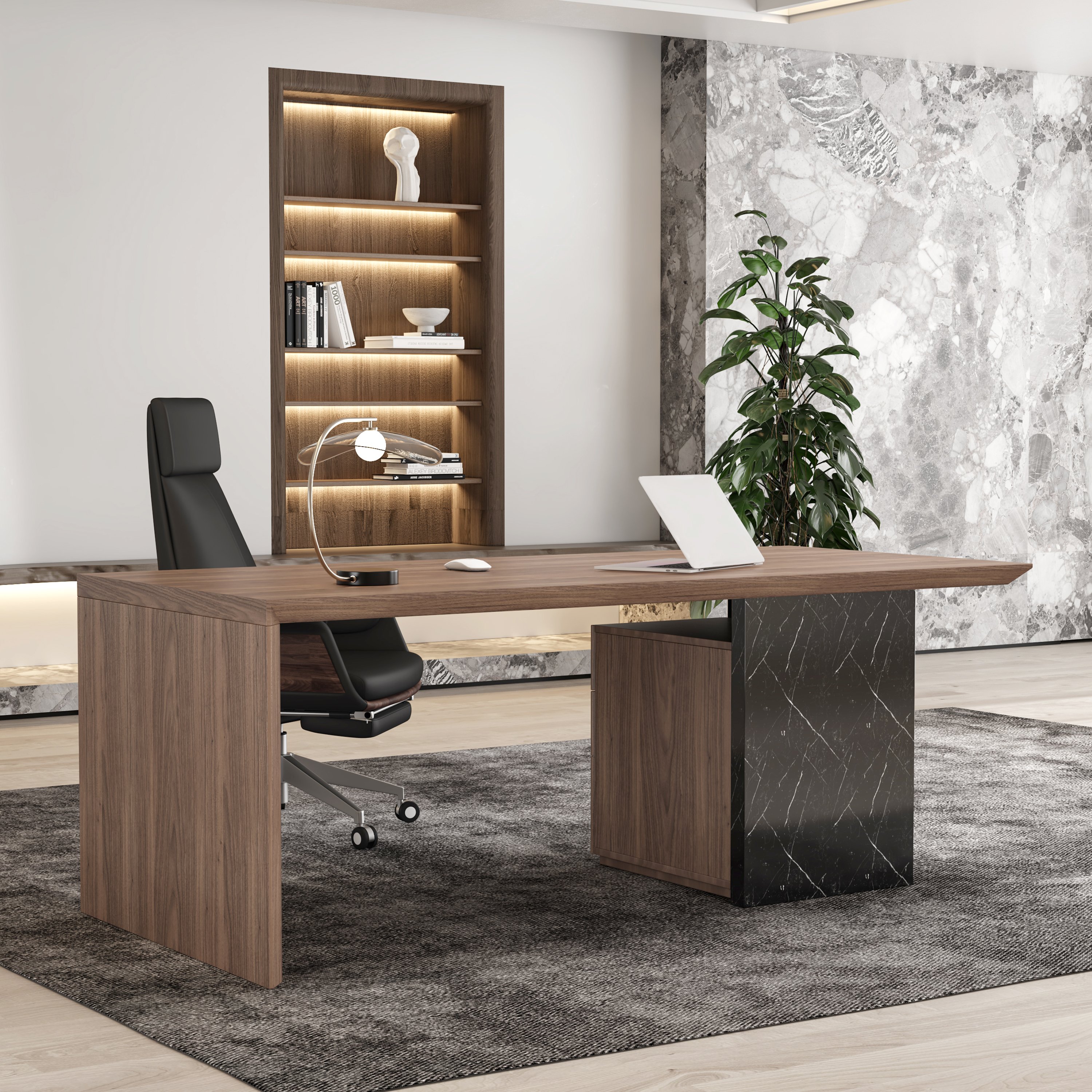
The Room Around It: Building the Right Context
A marble desk in an otherwise unconsidered room is a missed opportunity. The desk will look its best when the rest of the room is giving it the right context.
Walls: Warm white, soft greige, or a muted warm tone (sage, dusty terracotta, warm charcoal) all work well. Avoid cool greys they fight with the natural warmth in most marble. If you want something more considered, a limewash or plaster-effect wall treatment behind the desk creates a textural backdrop that photographs beautifully and gives the stone a surface to contrast against.
Shelving: Open shelving behind or beside the desk adds depth and utility, but the styling of the shelves matters as much as anything else in the room. Group objects in odd numbers. Combine books with objects at varying heights. Include at least one marble or stone accent piece on the shelves a marble vase, a stone plinth, a small sculpture to create a material thread between the desk and the rest of the room.
Flooring: If you have a choice, warm timber flooring under a marble desk is one of the most successful material combinations in home office design. The organic warmth of the timber grounds the coolness of the stone. If you're working with a harder flooring surface (concrete, tile), consider a natural fibre rug jute, sisal, or a flat-weave wool to introduce that warmth underfoot.
The view from the door: Stand in the doorway of the room and look at the desk. This is the composition you're designing. Everything that's visible in that frame the wall, the shelving, the chair, the desk surface, the lighting should feel considered and cohesive. If something feels out of place, it probably is.
Which Marble Desk for Which Room Size?
Not every marble desk suits every space, and proportions matter.
For smaller study nooks and compact home offices: A single-slab marble top on a slim frame ideally wall-mounted or with a minimal leg profile keeps the visual weight low. Lighter marble tones (Carrara, pale travertine) open the space rather than compress it. Avoid heavy pedestals or thick marble slabs in small rooms.
For medium-sized dedicated home offices: This is where a desk like the New York Marble Modern Office Desk performs at its best. The proportions are designed for a proper working setup room for a monitor, a lamp, and a considered accessory arrangement without overwhelming a standard-sized room. The integrated storage drawers are particularly practical for keeping the surface clear.
For large executive home offices: A larger slab desk on a bold base becomes genuinely architectural a piece of furniture that commands the room rather than occupying it. Here you have room for more layering: a statement chair, flanking shelving, a gallery wall above the desk.
Marble Finishes: Honed vs Polished in a Work Context
Both finishes have their place, but they perform differently as a working surface.
Polished marble has a reflective surface that shows the veining at its most dramatic and amplifies the stone's natural depth. It looks stunning in photographs and in rooms with strong natural light. The practical consideration: it shows fingerprints and ring marks more readily than a honed surface, which matters on a surface you're working on daily.
Honed marble has a matte, silky finish that is visually softer and more forgiving in daily use. Marks and minor surface contact are less visible. If your desk is a genuine working surface monitor, keyboard, coffee cup, daily use honed is often the more practical choice without sacrificing the beauty of the stone.
For most home offices where the desk is used every day, honed is the right call. For a secondary desk that's more about styling than active computing, polished can work beautifully.

Caring for Your Marble Desk
A marble desk is not fragile but it is natural stone, and natural stone benefits from modest care.
- Seal it. When your desk arrives, apply a quality penetrating stone sealer. This reduces the porosity of the stone and makes it significantly more resistant to staining. Reapply once or twice a year depending on how heavily the surface is used.
- Use a desk mat or pad in your primary working zone. This protects the surface from the minor abrasions of daily use.
- Always use a coaster for drinks. Coffee, tea, and citrus-based drinks can etch marble if left sitting on an unsealed surface.
- Clean with a soft cloth and pH-neutral cleaner. Avoid anything acidic or abrasive. A quick daily wipe is all the routine maintenance your desk needs.
- Address spills immediately. Blot, don't wipe wiping spreads liquids across more of the surface. With prompt attention, most spills on a sealed marble desk leave no trace.
Treated with that level of modest care, a marble desk will outlast every other piece of furniture in the room.
The Investment Question
A marble desk costs more than a laminate or timber veneer equivalent. That's a straightforward truth worth acknowledging rather than avoiding.
But the calculation isn't just about the initial price. It's about what you get over time. Laminate edges lift. Veneer surfaces scratch and chip. Timber can warp and fade. Marble properly sealed and cared for improves in character as it ages. It doesn't date. It doesn't go out of fashion. The veining that makes every piece unique on day one is still there twenty years later, still doing its job of making the room feel considered.
For the room where you spend the most focused hours of your working life, that kind of longevity is worth the investment.
Ready to Find Your Marble Desk?
Explore our full marble office desk collection from classic white marble to statement Calacatta Viola and warm travertine finishes. If you're not sure which stone or size is right for your space, our team is happy to help — get in touch or visit us in store.


